

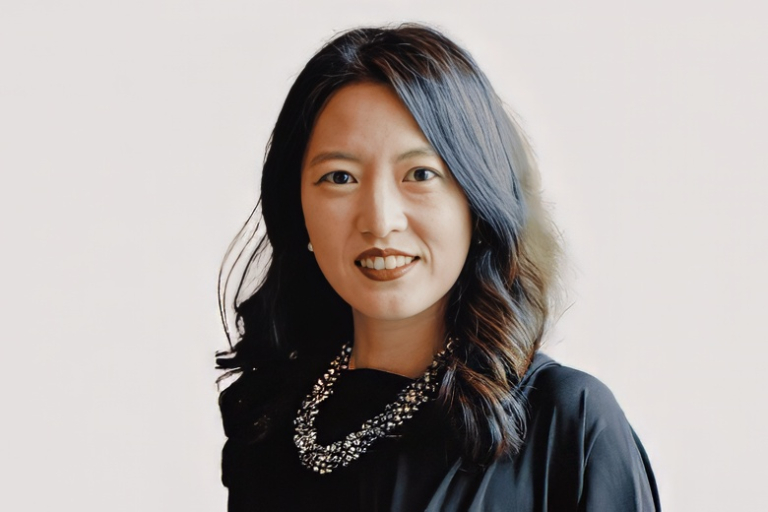
Yvonne Au Yong believes sustainability should not feel distant, complicated or reserved only for large corporations. In this episode, she brings the conversation back to what matters for Asian SMEs: building businesses that are resilient, responsible and prepared for the future.

When people hear the term ESG—Environmental, Social and Governance—it often sounds like a collection of corporate buzzwords, tedious reports and never-ending compliance checklists.
But Yvonne reframes it in a practical and refreshing way. ESG, she explains, is not about charity or doing good for appearances. It is a framework that helps businesses measure non-financial performance, manage risk and create long-term value.
At its core, ESG helps business owners understand how people, planet and profit intersect within their operations. More importantly, it gives leaders a way to anticipate change instead of constantly reacting to it. For SMEs navigating uncertain markets, shifting consumer expectations and evolving regulations, that perspective can become a competitive advantage.
Yvonne speaks from a unique vantage point shaped by 20 years of exposure to both Eastern and Western business environments, multinational corporations and SMEs, as well as a wide range of industries and disciplines. It is this broad worldview that she considers one of her proudest achievements. Her ability to bridge perspectives allows her to translate complex ideas into something business owners can actually apply.
The conversation includes vivid, practical examples: incineration-focused waste solutions that evolved into exportable technology; brands choosing sustainable materials and communicating their impact; and the idea that ESG should fit your business model, not the other way around. The message is clear: you don’t have to be a big company to make a meaningful ESG impact; you just need to start somewhere that makes sense for your business and your customers.
Why SMEs Should Lean In
Yvonne highlights several compelling reasons to act today:
- Revenue opportunities: Sustainability-conscious customers are seeking better quality, more reliable solutions, and brands that stand for something meaningful. She shares a story about responsible sourcing in this episode which can differentiate a product in a crowded market.
- Cost savings: Energy efficiency, waste reduction and smarter procurement can deliver measurable savings. Alliance Bank’s data shows 24% of ESG-adopting SMEs report cost savings of more than 51%, and 38% saw revenue increases of more than 51%.
- Access to finance and incentives: Green certifications can improve eligibility for government panels, grants, and favourable financing terms. Early adopters position themselves to benefit from future sustainability reporting requirements and public procurement preferences.
- Risk management and resilience: Preparing for climate risks (e.g., flooding, extreme heat) reduces operational disruption and protects long-term viability. ESG isn’t just about “doing good”—it’s about building a business that can weather the changing environment.
The Four Step ESG Process
Yvonne’s four steps comprises:
- Step 1: Know where you are. Do a simple ESG inventory and benchmark against available guidelines. In Malaysia, for example, there are simplified ESG disclosure guides for SMEs published by the capital markets authority. Use these guides to measure progress in concrete terms—training hours for employees, waste diversion from landfills, energy reductions, and other tangible metrics.
- Step 2: Define your ethos and material topics. Ask what matters most to your business—environmental impact, social equity (including staff welfare and diversity) and governance. Focus on the topics that truly move your business forward.
- Step 3: Start with low-hanging fruit and plan what you can realistically invest. You don’t need to do everything at once. Build capability gradually, allocate budget and time, and track your progress.
- Step 4: Communicate and engage. It’s not enough to do good work; you must share it with stakeholders—employees, customers, suppliers and your local community. Transparent communication helps you build trust and unlock new partnerships and markets.
A Framework for SMEs: People, Planet, Profit
Approaching ESG through the lens of people, planet and profit helps you map the interdependencies within your business and sets the stage for sustainable growth. ESG simply put is a framework to measure non-financial performance across three pillars:
- People: Employee training, fair labour practices, diversity.
- Planet: Resource use, energy, waste, and supply-chain impacts.
- Profit: Governance, risk management, access to finance, and cost/revenue implications.
Yvonne’s personal mantra, “Live and give my best,” comes through naturally in the way she approaches leadership and sustainability. There is a grounded optimism in her thinking—one that is inspired not only by business strategy but also by philosophy, humanity and lifelong learning.
A lover of non-fiction and philosophical literature, Yvonne draws inspiration from authors such as Dr. David Schwartz, particularly The Magic of Thinking Big, as well as the timeless influence and sales principles of Dale Carnegie. She also enjoys the spiritually reflective storytelling of Paulo Coelho and the leadership insights of Patrick Lencioni. More recently, she has been exploring the wisdom of Lao Tzu’s Dao De Jing, seeking deeper understanding through Eastern philosophy.
Outside of work, Yvonne enjoys the outdoors and especially loves rock climbing and salsa dancing—two activities that perhaps mirror her approach to life: balancing discipline with freedom, and resilience with rhythm. Her appreciation for culture also shows up in the simple things. She enjoys listening to Jacky Cheung and The Beatles, while her favourite comfort foods remain unmistakably Malaysian: Penang laksa and char kuey teow.
This episode is a reminder that sustainability is not merely a reporting exercise. It is about building businesses that can adapt, endure and contribute meaningfully in a changing world. Through Yvonne’s lens, ESG becomes less about corporate jargon and more about thoughtful leadership, practical action and creating businesses that are fit for the future.
This episode is sponsored by Redbox Studio.
Sign up for updates, news and opportunities.